


Fix the problem before you replace the faucet.
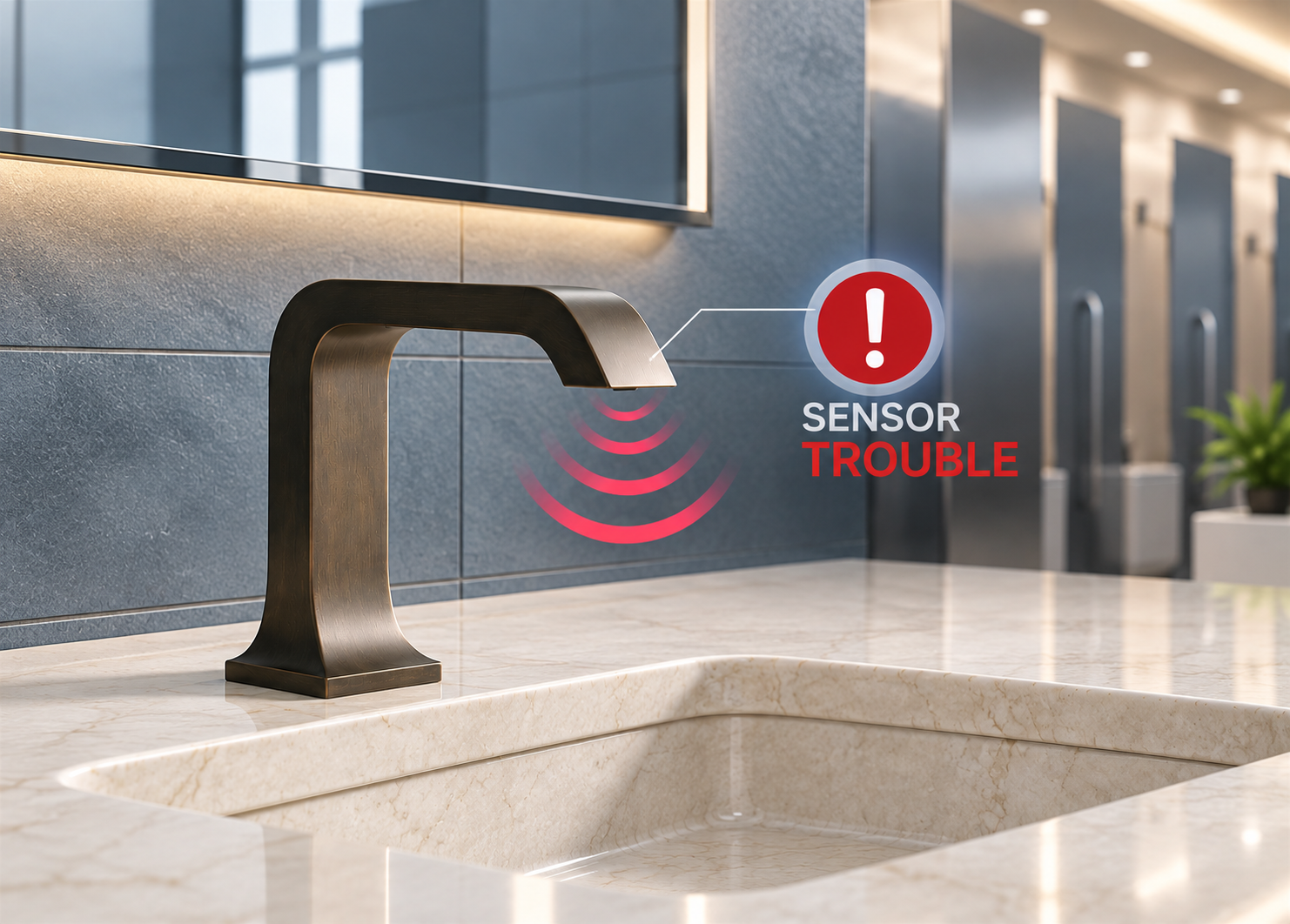
Sensor trouble
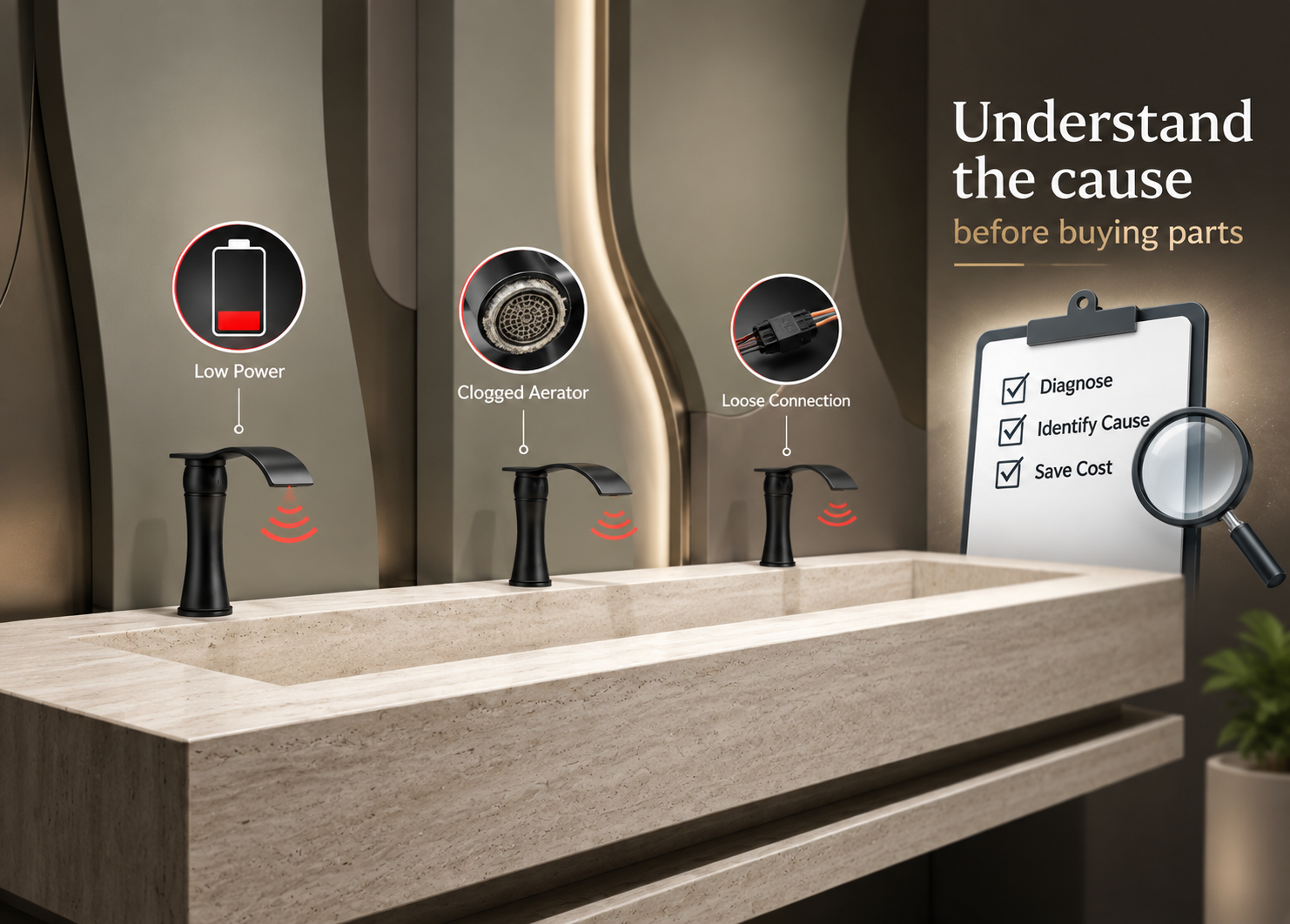 Understand the cause before buying parts
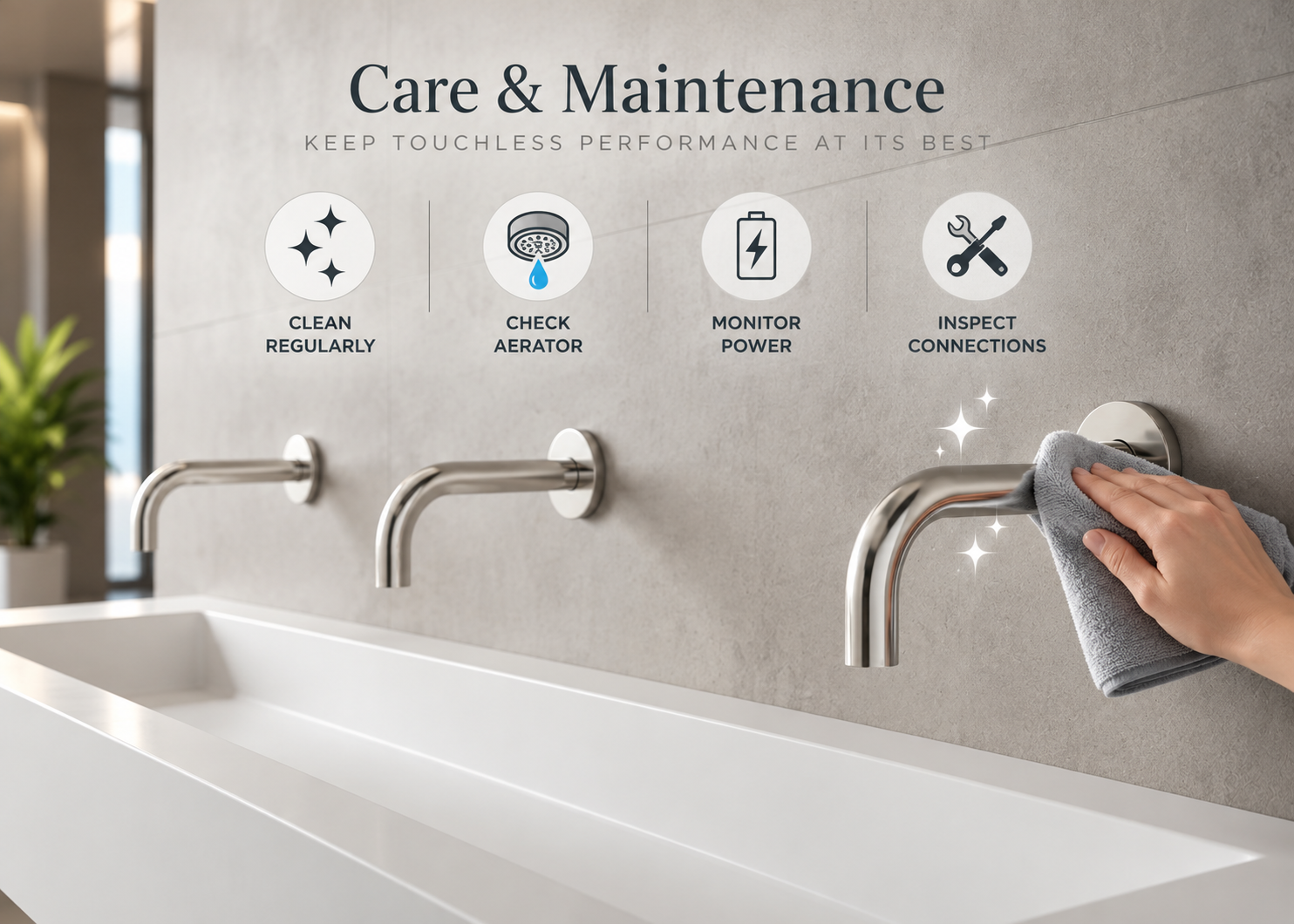 Care & maintenance
You do not need to know the technical name of every part. Start with what the faucet is doing, then work through the most likely causes.
Start with the question you have today.
Go straight to common problems, learn how the faucet works, or focus on maintenance that can help prevent repeat issues.

Something is wrong
Use the symptom you see to narrow the likely cause.
See common problems →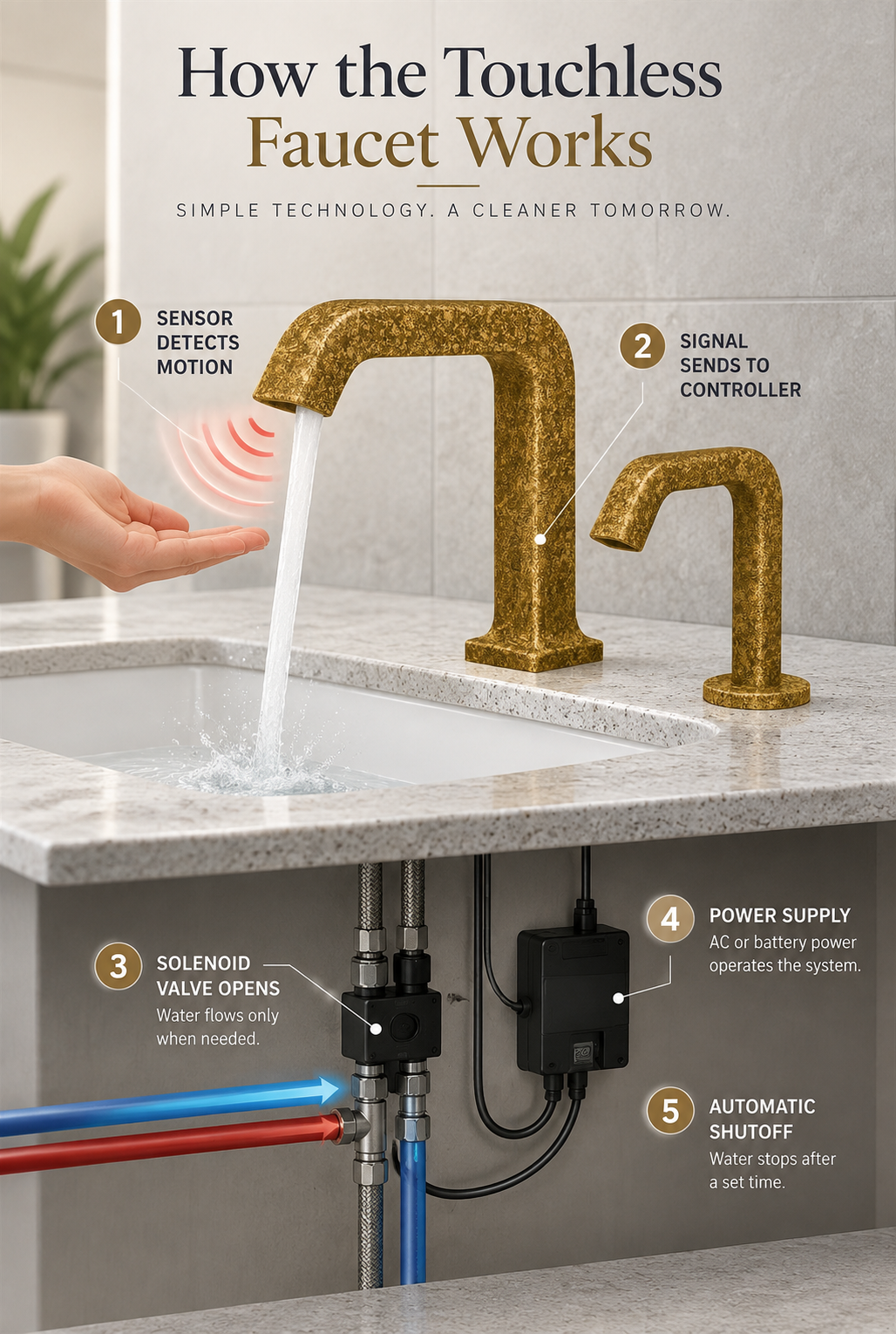
See how the faucet works
Understand the sensor, power, water-control valve and flow path in plain language.
Learn the basics →
Keep it working
Use simple cleaning and checks to reduce avoidable problems.
See care guides →What is your touchless faucet doing?
Start with the problem you can see. The same symptom can have more than one cause, so begin with simple checks before buying replacement parts.
- It will not turn onPower, sensor, wiring or valve
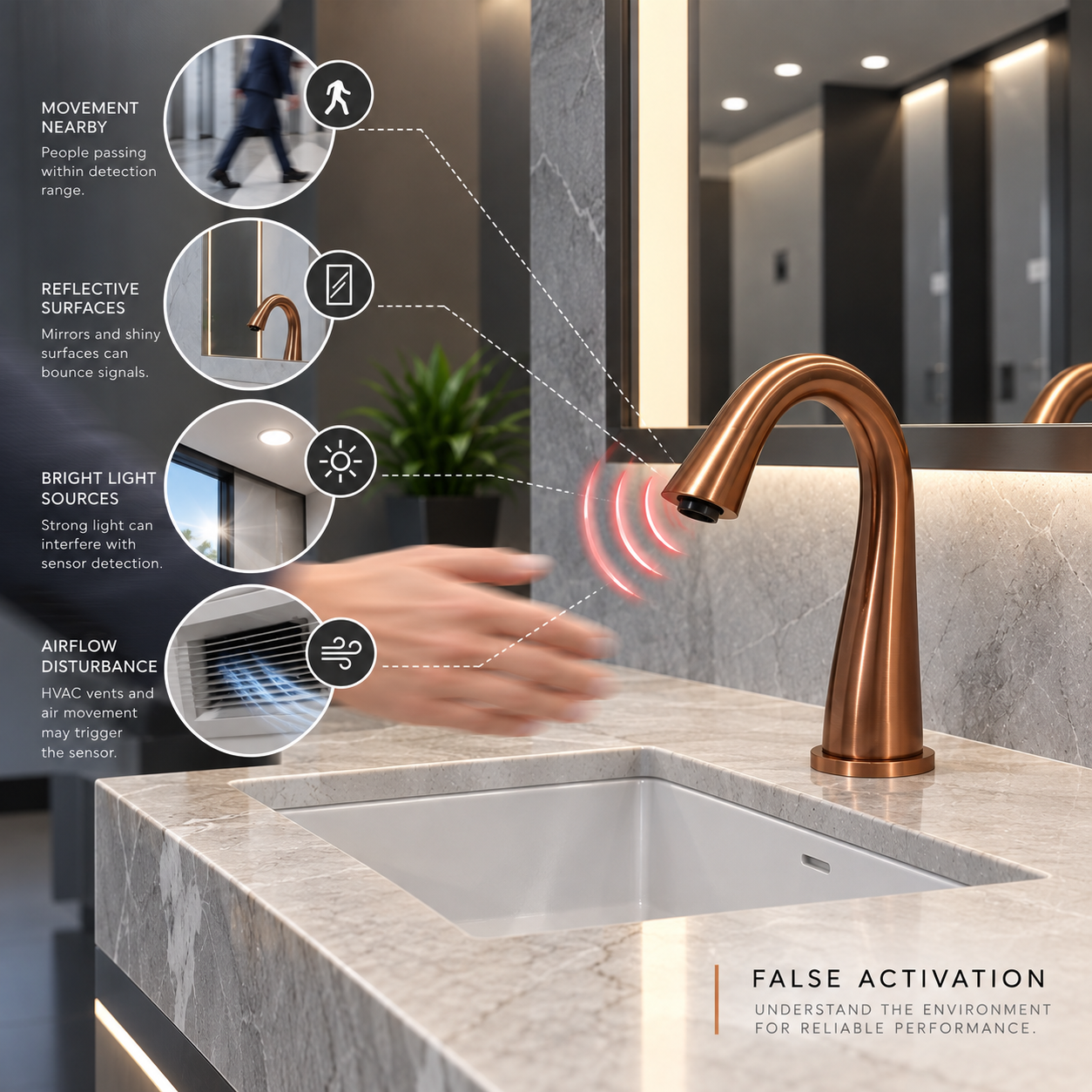
- It turns on by itselfLight, reflections or sensitivity
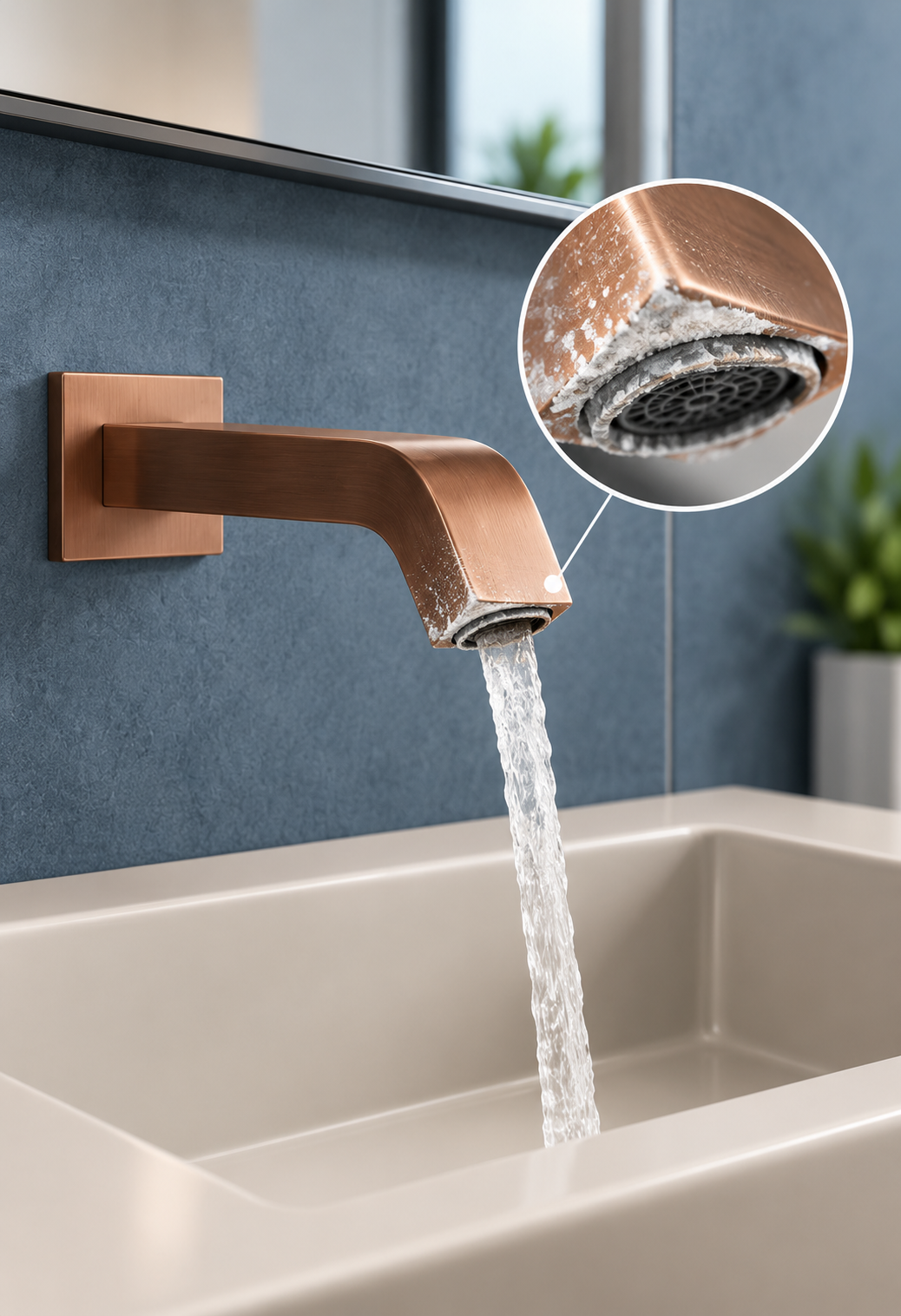
- The flow is weakAerator, scale or supply restriction
- The batteries die quicklyFrequent triggering, moisture or wiring
- The water will not stopDirty or sticking water-control valve
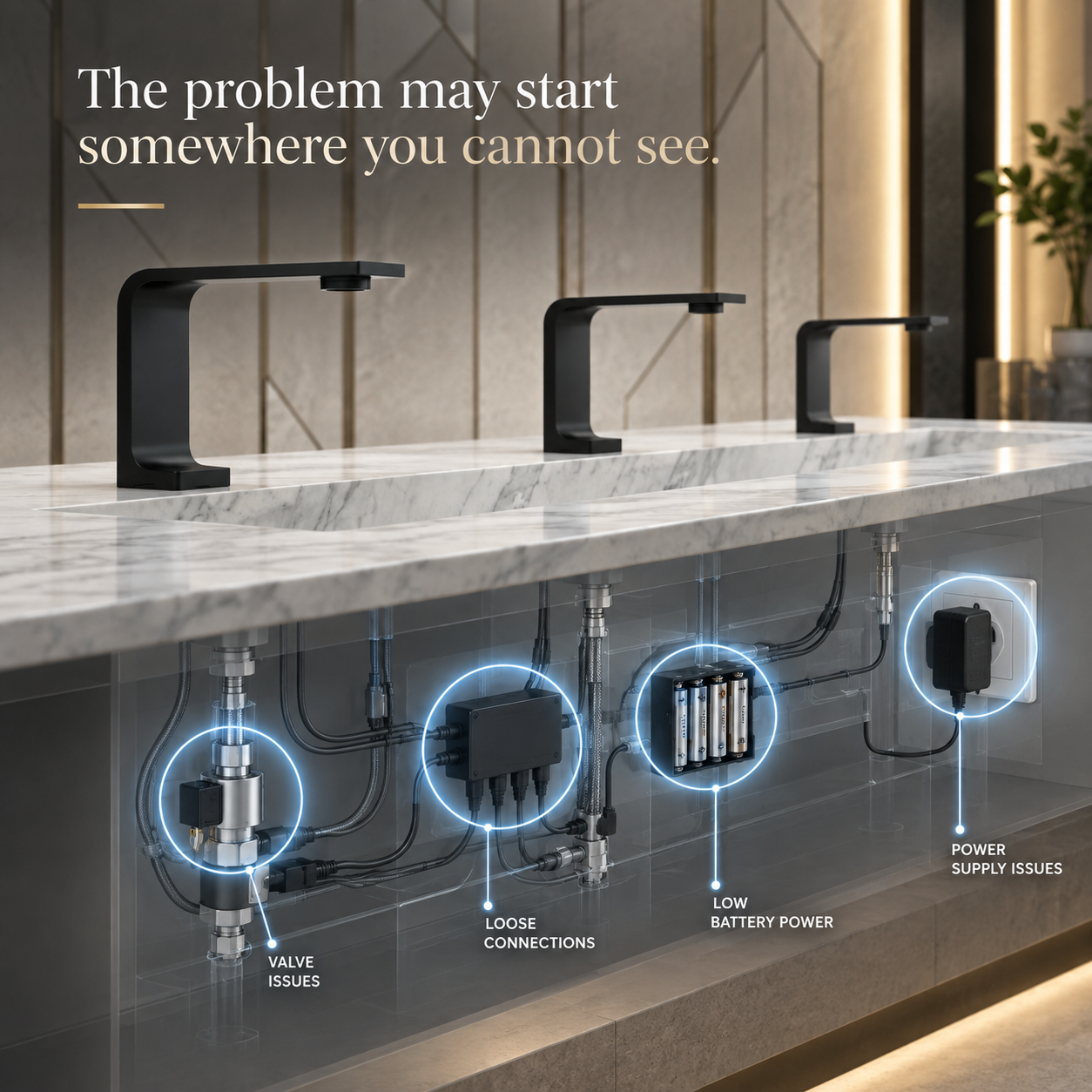
The problem may start somewhere you cannot see.
The faucet at the sink is only the visible part. A sensor, power source, wiring, a small electric water-control valve and the water supply all need to work together.
Dirt, water spots, bright light or reflections can affect how the faucet sees your hands.
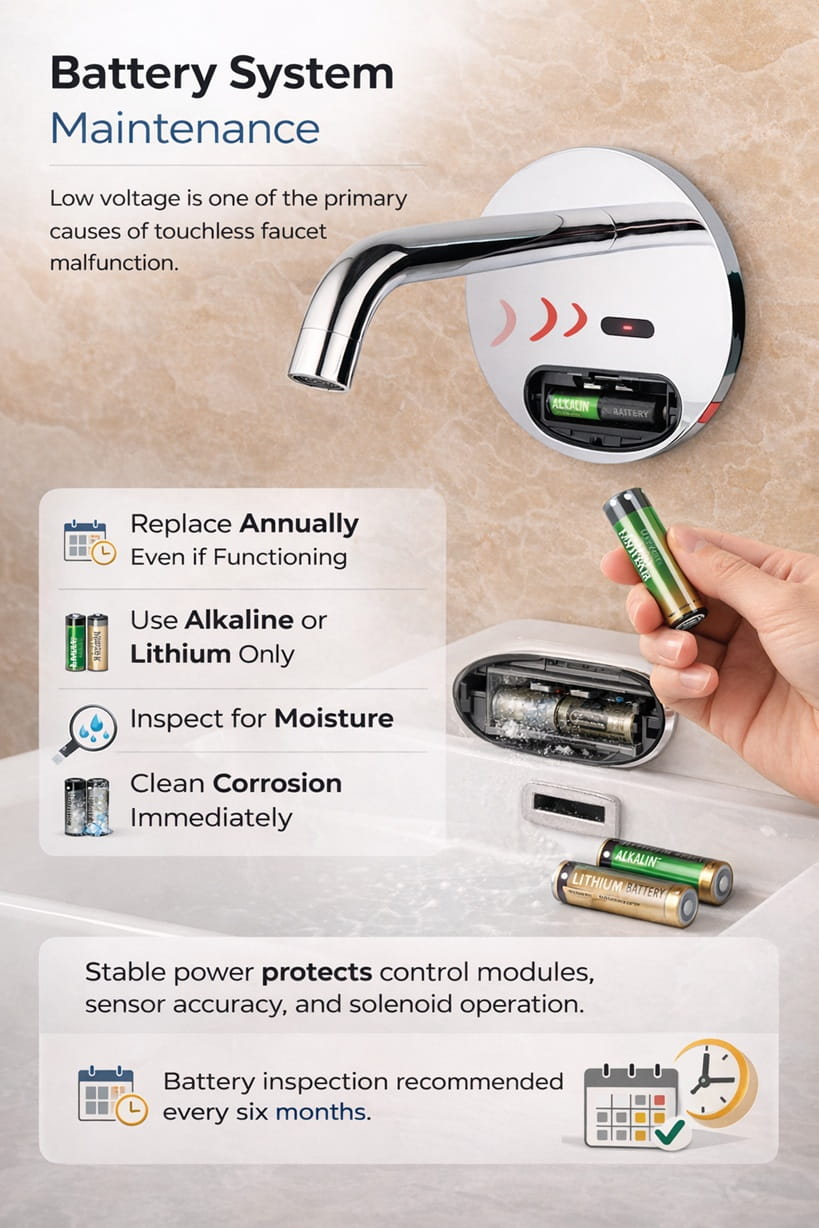
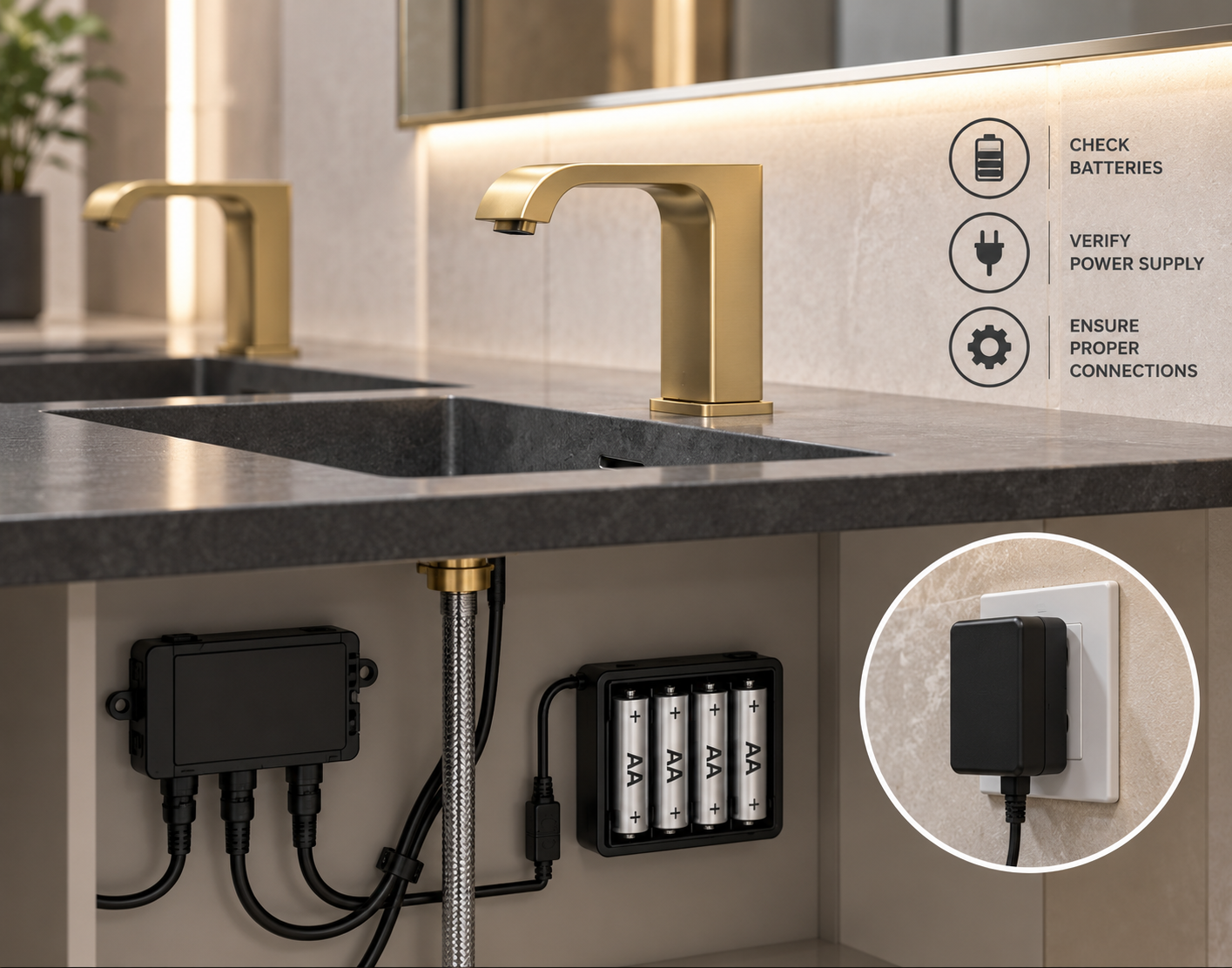
Batteries, adapters and connections need to supply steady power.
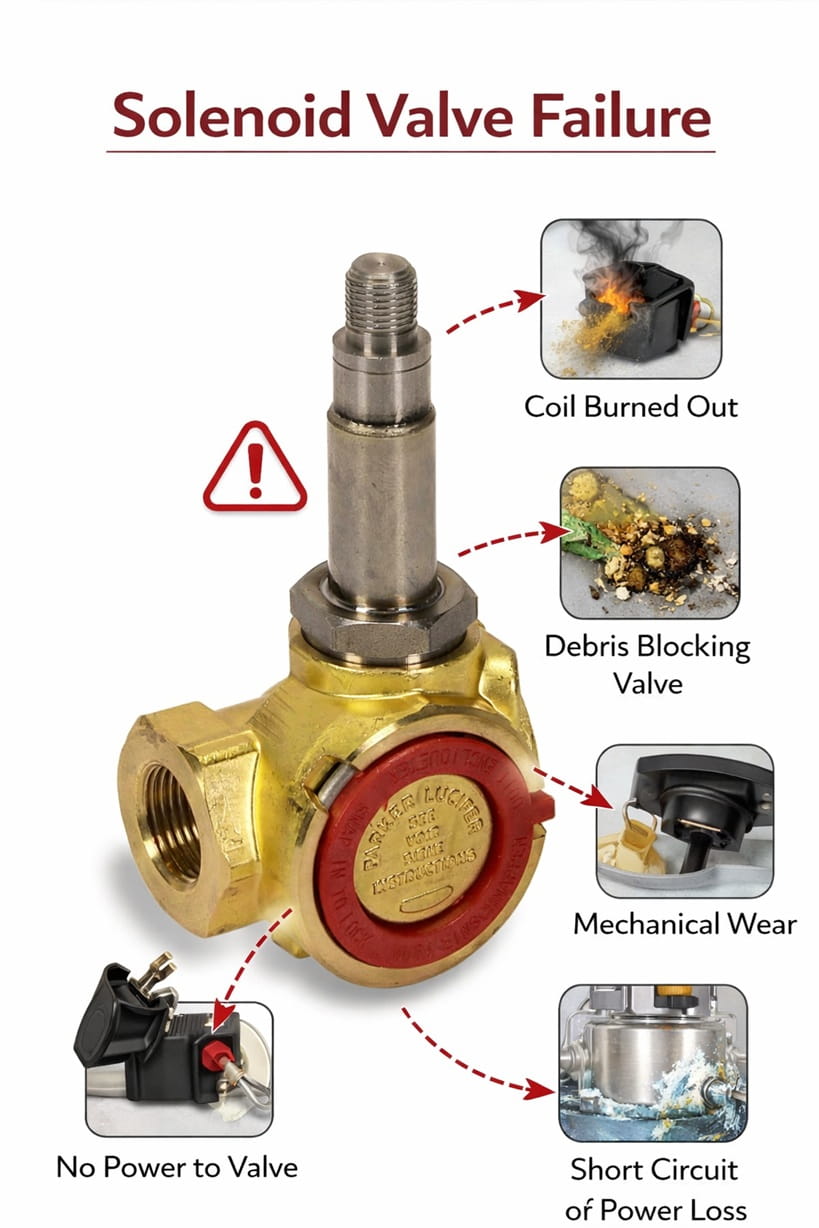
This small electric valve, often called a solenoid, opens and closes the water.
Sediment, mineral buildup or a clogged aerator can reduce flow.
Small maintenance habits can prevent repeat problems.
Clean the areas you can safely reach, watch for moisture, and check batteries or visible connections before a small issue becomes a bigger service call.
Keep the sensor clean
Soap film and water spots can make some sensors less consistent. Clean according to the faucet maker’s instructions.
Check power early
Weak batteries, corrosion or loose contacts can cause slow or inconsistent response.

Watch for buildup
Scale and debris can reduce flow and interfere with moving water-control parts.
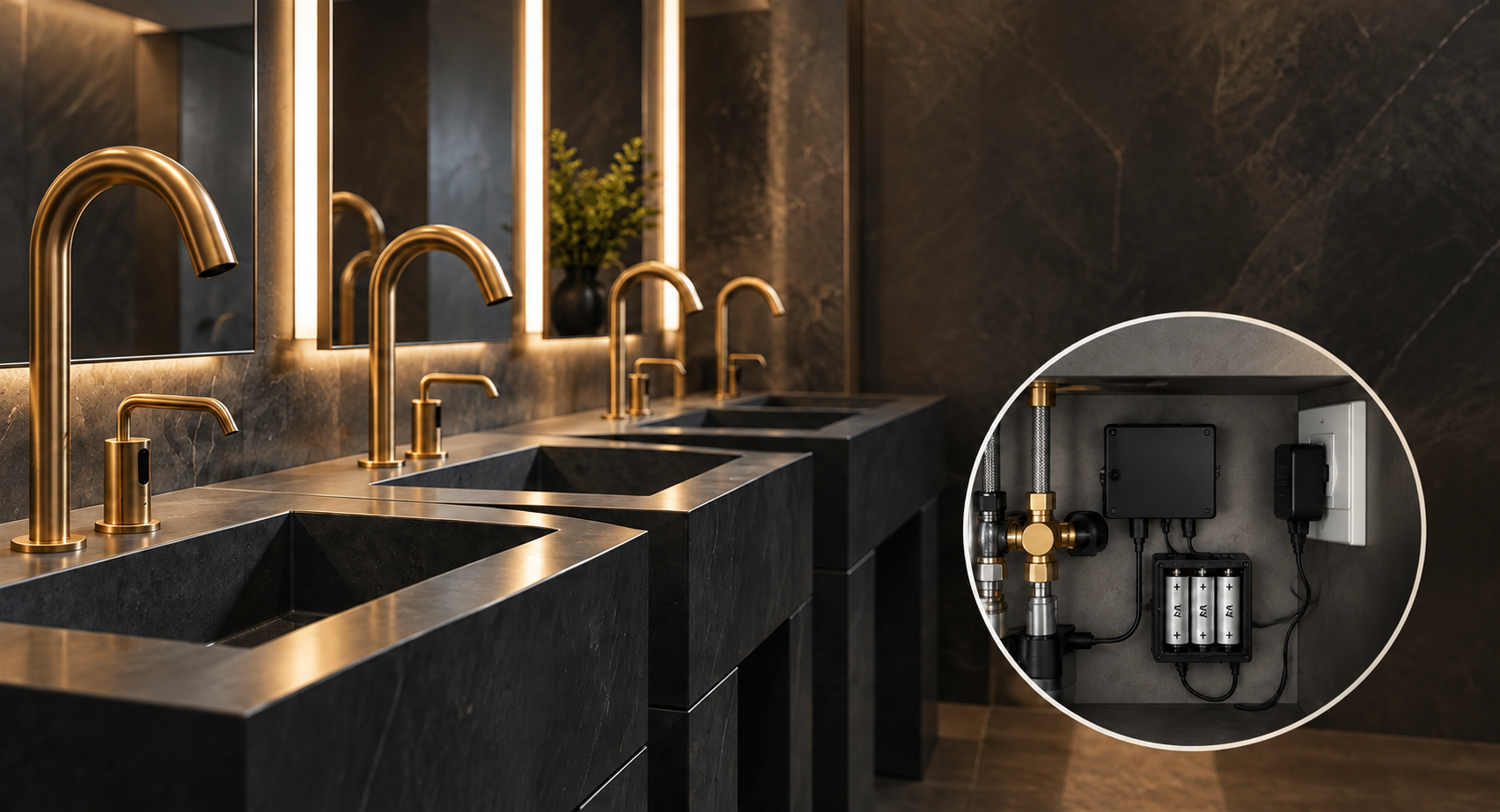
Some problems are better left to a qualified professional.
If the issue involves leaking electrical parts, concealed plumbing, persistent valve trouble or anything you are not comfortable servicing, use a qualified plumber or maintenance technician.
Useful whether you have one faucet or a building full of them.
Check simple causes before buying parts, replacing the faucet or booking service.
See maintenance and installation issues that can affect long-term performance.
Use consistent checks across multiple restrooms and reduce unnecessary replacement.
Use symptom-based guidance to narrow likely causes before opening concealed parts.
Start with what the faucet is doing. Then check the most likely causes.
Use the problem guides, plain-language explanations and maintenance tips to make a more informed next decision.